 INCLUDE (INvestigation of Co-occurring conditions across the Lifespan to Understand Down syndromE) ProjectHosted challenge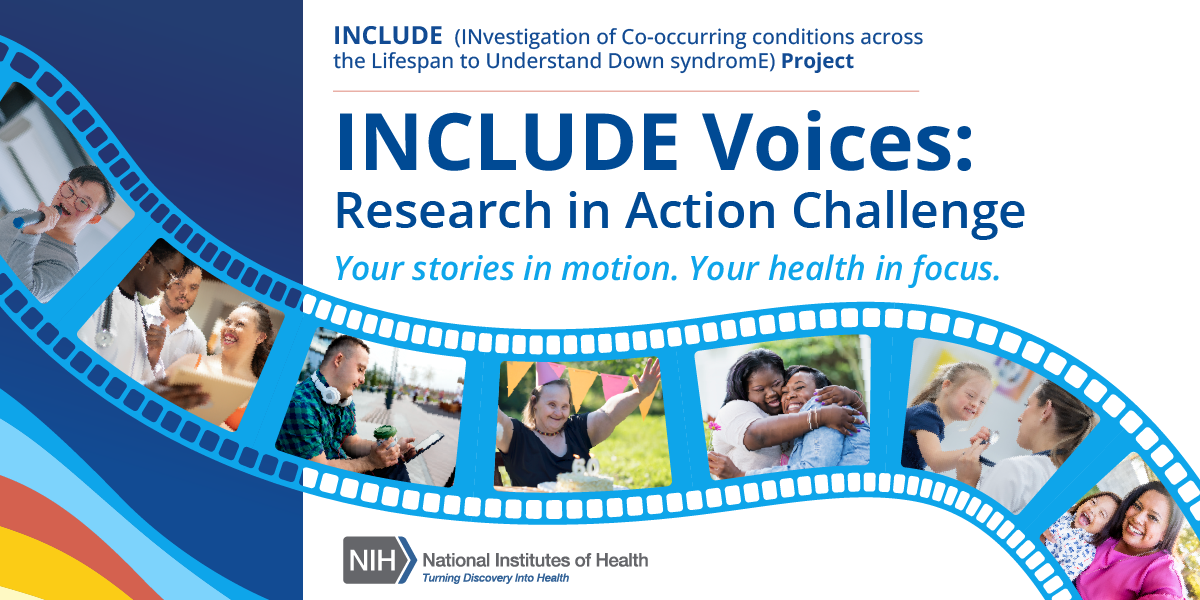
Subject of the Challenge
Scientific research is transforming our understanding of Down syndrome and its co-occurring conditions, leading to discoveries that improve health, well-being, and quality of life across the lifespan. The “INCLUDE Voices: Research in Action Challenge” invites people with Down syndrome, families, caregivers, researchers, clinicians, students, advocacy organizations, and other members of the Down syndrome community to create original content that brings research to life. Through storytelling, creative media, and science communication, participants will help explain how research is improving lives, encourage greater participation in research, and inspire conversations about the future of Down syndrome research.
Down syndrome is a genetic condition in which a person is born with an extra copy of chromosome 21. It is the most common chromosomal condition in the United States, affecting approximately 1 in every 700 births — about 6,000 babies each year. Within the past 25 years, the average lifespan for a person with Down syndrome has doubled, from 30 to 60 years. As people with Down syndrome live longer and healthier lives, research is helping us better understand their health needs across the lifespan and develop new ways to improve care, support, and quality of life.
Having an extra copy of chromosome 21 can affect virtually every tissue and organ throughout a person's life. This gives rise to what researchers call co-occurring conditions: health conditions that appear alongside Down syndrome at rates that differ from the general population. On average, for people with Down syndrome, some conditions occur more frequently, like Alzheimer's disease and congenital heart disease. Others occur far less frequently, like certain tumors. Understanding these unique risks and resiliencies has the potential to transform care for people with Down syndrome and to unlock discoveries that benefit everyone.
A challenge, also known as a prize competition, is an open call for the public to solve a problem or communicate an idea, where the best submissions are recognized with a prize. Unlike NIH grants, challenge prizes can offer unrestricted cash awards, meaning winners can use the money however they choose, with no reporting requirements or programmatic conditions attached. NIH conducts challenges like this one to reach beyond the traditional scientific community and invite fresh perspectives from anyone with something meaningful to contribute. By opening the door to a broad range of voices and talents, challenges help NIH find innovative solutions that might not emerge through conventional funding mechanisms.
This challenge is part of the National Institutes of Health (NIH) INCLUDE (INvestigation of Co-occurring conditions across the Lifespan to Understand Down syndromE) Project, a NIH-wide initiative that aims to expand knowledge about Down syndrome and its co-occurring conditions, increase participation of people with Down syndrome and their families in research, and ultimately improve the health and quality of life of people with Down syndrome. Through collaboration between the Down syndrome and scientific communities, the INCLUDE Project advances research across the lifespan and expands our understanding of Down syndrome and health conditions that occur alongside Down syndrome.
The Challenge
The INCLUDE Project invites people with Down syndrome, families, caregivers, researchers, clinicians, students, advocacy organizations, and other members of the Down syndrome community to share their knowledge, creativity, and perspectives of research through short video entries that communicate how Down syndrome research improves health, informs care, expands opportunity, and enhances quality of life across the lifespan. Whether explaining why research participation matters or sharing how research has influenced everyday life, your videos can help make research more understandable, engaging, and accessible to a broad audience.
Submissions may address any of the following themes (this list is not exhaustive):
- Why Research Participation Matters: Explain why research participation is important, what it is like to take part in a clinical trial or other research study, how participants help advance scientific discoveries, and how people can get involved.
- From Discovery to Real-World Impact: Demonstrate how research findings are translated into therapies, interventions, services, support technologies, education, policies, health care practices, greater independence, employment, quality of life, or other improvements that benefit people with Down syndrome and their families.
- Research that Benefits Everyone: Show how discoveries from research on Down syndrome and its co-occurring conditions are expanding scientific knowledge and leading to advances that improve health and quality of life for people with Down syndrome while also benefiting the broader population.
- Research Across the Lifespan: Highlight the importance of studying Down syndrome throughout life, from infancy to adulthood, to better understand health, development, aging, and quality of life.
- Research During Life Transitions: Explore why research is needed during key life transitions, such as early childhood, adolescence, adulthood, employment, supported or independent living, and healthy aging.
- Women’s Health and Down Syndrome: Raise awareness about the importance of research on women’s health throughout the lifespan, including puberty, menstrual health, hormonal changes, fertility, pregnancy, perimenopause, menopause, and healthy aging.
- Building Inclusive Research Teams: Show how people with Down syndrome contribute to research as research assistants, advisors, educators, ambassadors, or other members of research teams. Highlight how their perspectives and experiences help create more welcoming, inclusive, and participant-centered research and strengthen connections between researchers and the Down syndrome community.
- Partnerships That Advance Research: Share stories that demonstrate how people with Down syndrome, families, caregivers, researchers, clinicians, advocacy organizations, and other partners work together to advance research and improve lives.
Appropriate communication vehicles (video formats) include, but are not limited to:
- Documentary-style short film
- Animation or motion graphics
- Dramatic reading or spoken word including use of Augmentative and Alternative Communication (such as sign language) to convey the message
- Interview or personal testimony
- Explainer video
- Music video or song with visual accompaniment
Submissions should be tailored to individuals with Down syndrome, their families, and their loved ones.
Each individual, team, or entity may submit only one (1) entry, limited to 3 minutes in duration.
Note: Entries must not use the logo or official seal of HHS or NIH and must not claim federal government endorsement.
Statutory Authority to Conduct the Challenge
The NIH Office of the Director is conducting this Challenge under the America Creating Opportunities to Meaningfully Promote Excellence in Technology, Education, and Science (COMPETES) Reauthorization Act of 2010, as amended [15 U.S.C. § 3719]. The INCLUDE Project is a component of the NIH Office of the Director budget, which is managed by the Director’s Office, Division of Program Coordination, Planning, and Strategic Initiatives and is supported by the NIH-wide Down syndrome Working Group.
The INCLUDE Project was launched in June 2018 in support of a Congressional directive in the fiscal year (FY) 2018 Omnibus Appropriations. It aims to increase participation of people with Down syndrome and their families in clinical research, expand knowledge about Down syndrome and its links to other health conditions, and improve the health of individuals with Down syndrome. INCLUDE supports people with Down syndrome and their communities by supporting research on basic science, cohort studies and clinical trials. It is beneficial to all stakeholders for INCLUDE to optimize the communication tools available to support effective information dissemination and education on research participation. This Challenge will lead to innovative ways to communicate with others and to educate people about the value of Down syndrome research through accessible video media.
Powered by CrowdPlat